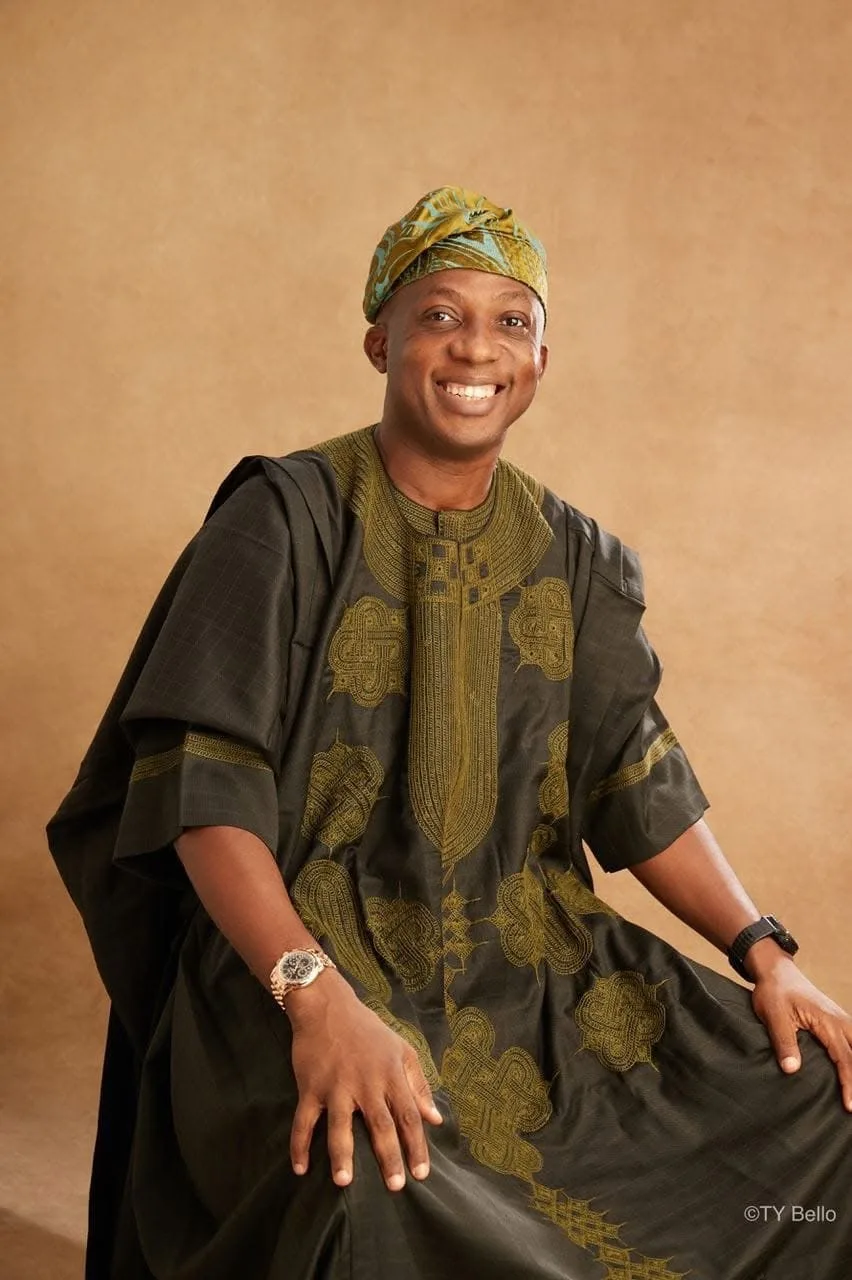

Lagos State Commissioner for the Environment and Water Resources, Tokunbo Wahab, has defended the state government’s tough environmental enforcement policies, insisting that he will not apologise for decisions taken in the public interest, even when they affect people close to him.
Wahab made the remarks in an interview with The Nation, in which he addressed concerns about demolitions, alleged selective enforcement, flooding, waste management, plastic pollution and the state’s public water supply.
Also read:Adeniyi urges smarter, intelligence-led customs operations
Responding to allegations that the government targets small traders while allowing wealthy property owners and influential individuals to escape sanctions, the commissioner said enforcement was not determined by social status or personal relationships.
He cited the removal of structures built along the Ikota River as an example, explaining that 47 of the 52 houses in an estate developed by a personal friend were affected because they encroached on the river’s alignment.
According to him, the friendship did not prevent the government from taking action because the wider public interest had to come first.
“But overriding public interest takes precedence over personal relationships. Public service is not meant to be a walk in the park.

You have to make tough decisions if you want to do the right thing. I do not owe anybody an apology for doing what is right,” Wahab said.
He maintained that property owners must obtain the necessary planning approvals and environmental clearances before undertaking developments, warning that construction on floodplains could obstruct the natural movement of water and put lives at risk.
The commissioner also challenged developers who claim to have government approval for disputed structures to produce their documents so the relevant authorities can establish whether the approvals were properly issued.
On flooding, Wahab said it was unrealistic to expect Lagos to eliminate the problem completely because of its coastal geography, rising sea levels and exposure to heavy rainfall.
He explained that about one-third of the state’s landmass is covered by water, while its southern boundary stretches along approximately 186 kilometres of the Atlantic Ocean.
He added that some areas, including Lagos Island, are below sea level, making conventional drainage systems insufficient without additional infrastructure.
The commissioner said the state had installed a pump station at Ilubirin to discharge large volumes of storm water and was planning another facility at Kusenla to improve drainage during heavy rainfall.
He also highlighted the Emergency Flood Abatement Gang, which now operates throughout the year to clear and desilt drainage channels, rather than working only during the rainy season.
According to Wahab, the government is targeting an improvement in flood abatement from between 75 and 80 per cent to 90 per cent by 2027.
However, he stressed that achieving zero flooding would remain unrealistic given the state’s environmental conditions.
On waste management, Wahab said Lagos could no longer rely on the traditional system of collecting refuse and dumping it at landfill sites.
He explained that the state was working towards a model in which waste could be converted into resources for wealth creation and energy generation.
The commissioner acknowledged that the Lagos State Waste Management Authority (LAWMA) and private sector participation operators had experienced operational difficulties, which affected refuse evacuation and required government intervention.
He said the government had reviewed the situation and expected the authority’s new leadership to meet its responsibilities.
Wahab also disclosed plans to bring in 150 additional trucks to complement the 102 trucks available to LAWMA.
He said the state had introduced food-waste-to-energy initiatives in markets and was developing transfer stations and facilities for processing waste and recovering reusable materials.
The long-term plan, he explained, is to decommission and cap existing dumpsites when alternative waste-management facilities are ready to handle the volume of refuse generated daily.
On the enforcement of restrictions on styrofoam and certain single-use plastics, Wahab put compliance at more than 70 per cent, with some months recording approximately 80 per cent.
He said the government was combining enforcement with public education and engaging market leaders to encourage the adoption of biodegradable alternatives.
Wahab also defended the ministry’s record of environmental enforcement, referring to 10,634 arrests for environmental infractions within one year.

He said enforcement covered different categories of establishments, including churches, mosques, bars and other businesses accused of violating environmental regulations.
Using noise pollution as an example, he argued that residents should not expect authorities to ignore repeated complaints about establishments disturbing neighbourhoods with loud music late at night.
He maintained that his responsibility was to enforce existing laws rather than make arbitrary arrests.
“If there is no law, I cannot just arrest people and take them to court at my own discretion. There must be a legal basis,” he said.
The commissioner argued that environmental regulations would have little effect if offenders faced no consequences, adding that compliance required residents and businesses to respect rules governing public spaces.
On concerns about a possible crackdown on private boreholes and wells, Wahab said the state would not enforce the existing 2017 law against residents under the present circumstances.
He reasoned that it would be unfair to restrict private water sources when the government had yet to provide reliable piped water across the state.
He said the legislation was designed to protect the ecosystem rather than punish residents, adding that the Lagos State House of Assembly was reviewing the law and could decide to remove it.
Wahab identified ageing waterworks and deteriorating distribution pipelines as major reasons for unreliable public water supply.
He explained that significant quantities of treated water were lost through leaking pipes before reaching consumers, making it necessary to repair distribution infrastructure alongside efforts to increase production.
He said the state was working to restore smaller waterworks and expand existing facilities, including projects at Iju and Adiyan.
The commissioner disclosed that the Adiyan II contractor’s contract had been terminated over failure to meet contractual obligations, although work on the project was continuing.
He said an approximately 8.2-kilometre pipeline conveying raw water from Akute along the Ogun River to the treatment plant had been completed, while mechanical work was ongoing.
When fully operational, Adiyan II is expected to have a capacity of about 70 million gallons of water daily.
Reflecting on his time in government, Wahab said he wanted to be remembered as someone who encouraged residents to take responsibility for protecting the environment and safeguarding the future.
Before becoming environment commissioner, he served as Special Adviser on Education to the Lagos State Governor from 2019 to 2023.
He highlighted the establishment of Lagos State University of Education and Lagos State University of Science and Technology, as well as the delivery of 10,800 student bed spaces at Lagos State University through a public-private partnership arrangement.
Wahab said public service required commitment, measurable results and the willingness to make difficult decisions.
Also read:Adeniyi urges smarter, intelligence-led customs operations
He also credited the support of the Lagos State Governor, his deputy and his family for helping him carry out his responsibilities.

Mariam Balogun is a contributor to Freelanews.com, covering news, business, and public affairs.