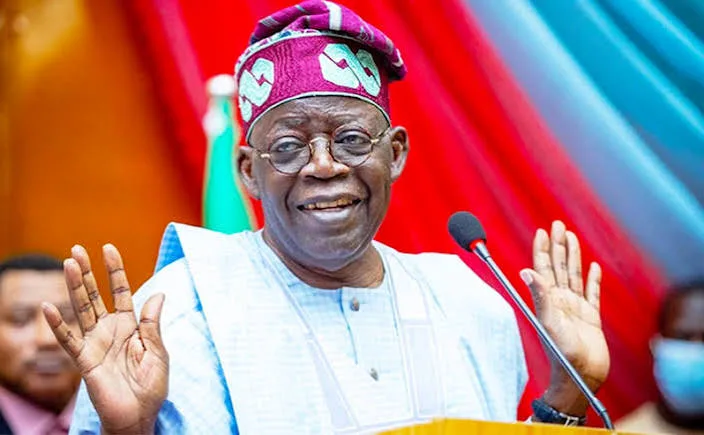

The founder of Christ As of Old Ministry of All Nations, Prophet Ezenwa George Ritabbi, has predicted that President Bola Ahmed Tinubu will win Nigeria’s 2027 presidential election, but warned that the outcome could trigger violence, political divisions and a possible military takeover.
The Jos-based cleric made the prediction while addressing his congregation on Sunday, 22 November 2026, claiming that the aftermath of the election could plunge the country into a period of instability and threaten its democratic system.
Also read:Infantino praises Tinubu, says president is doing ‘fantastic job’
In a video circulating on social media, Ritabbi described a chain of political developments he believed could follow Tinubu’s victory, including court disputes, disagreements among political actors, violence and the eventual intervention of the military.
The prophecy has drawn attention as political activities intensify ahead of the 2027 general elections, with discussions surrounding presidential contenders, opposition alliances, party defections and the possibility of a closely contested race.
However, the cleric’s claims remain a religious prediction and should not be interpreted as an established forecast of election results or evidence that a coup is being planned.
In the video, Ritabbi said Tinubu would emerge victorious, while opposition politician Peter Obi would challenge the outcome in court.

He also suggested that political disagreements involving Rabiu Kwankwaso and supporters could contribute to unrest.
The cleric claimed the situation could escalate into violence before the military intervened and divided the country into three sections, which he described as the North, East and South.
In his words:
“Tinubu will win. Obi will go to court. Court will tell Obi to go.”
He further claimed that political tensions could spiral into a confrontation, adding:
“Before you know it, Kwankwaso’s boys raised alarm and fight broke out and military takes over.”
Ritabbi also suggested that other religious leaders would react to his prediction after he made it public, claiming that some were waiting for him to declare who would win the presidential election.
The statements have not been independently substantiated, and there is no evidence presented in the video to establish that the political sequence he described would occur.
Ritabbi’s prophecy comes amid increasing political speculation about the 2027 presidential election, with President Tinubu expected to seek another term and opposition figures positioning themselves to challenge the ruling All Progressives Congress (APC).
Political endorsements, emerging alliances and competing projections about the election outcome have already become part of the national conversation.
Other political predictions have also emerged in recent weeks. Some public figures and groups have expressed confidence in Tinubu’s re-election prospects, while opposition supporters continue to debate possible candidates, coalitions and strategies to challenge the ruling party.
These political assessments, however, differ from religious prophecies and are themselves not guarantees of electoral outcomes. The final decision rests with Nigerian voters and the electoral process.
The growing volume of predictions underscores the heightened political attention surrounding the forthcoming election, even though the actual contest remains subject to campaign developments, voter preferences, party structures and electoral conduct.
The possibility of military intervention remains a sensitive subject in Nigeria because of the country’s history of military rule, which interrupted democratic governance for decades before civilian rule returned in May 1999.
Nigeria experienced several military coups between 1966 and 1999, including the overthrow of the First Republic and the collapse of the Second Republic in December 1983.
The prolonged period of military governance left lasting political, institutional and social consequences.
Since the return to civilian government in 1999, Nigeria has maintained uninterrupted democratic rule, despite political disputes, electoral controversies, insecurity and public dissatisfaction with governance.
The country’s democratic experience has nevertheless faced challenges, including concerns over electoral credibility, institutional accountability, political violence and declining public confidence in aspects of the political system.

Those issues make warnings about instability particularly sensitive, especially as Nigeria approaches another major electoral cycle.
The Federal Government has publicly reaffirmed its commitment to conducting free, fair and credible elections in 2027.
Information Minister Mohammed Idris said in November that the administration remained committed to supporting the democratic process and strengthening the institutions responsible for conducting elections, while emphasising the importance of allowing the Independent National Electoral Commission (INEC) to operate independently.
The government has also cautioned against misinformation and unverified claims that could inflame political tensions or undermine confidence in the electoral process.
Against this backdrop, Ritabbi’s prediction of post-election violence and military intervention is likely to attract public debate, particularly among Nigerians concerned about political stability, national unity and the preservation of democratic institutions.
Nevertheless, the outcome of the 2027 election, the conduct of political actors and the country’s stability after the polls cannot be established through prophecy.
Also read:Infantino praises Tinubu, says president is doing ‘fantastic job’
They will depend on actual events, constitutional processes, the actions of political leaders, security institutions and the choices made by Nigerians.

Mariam Balogun is a contributor to Freelanews.com, covering news, business, and public affairs.