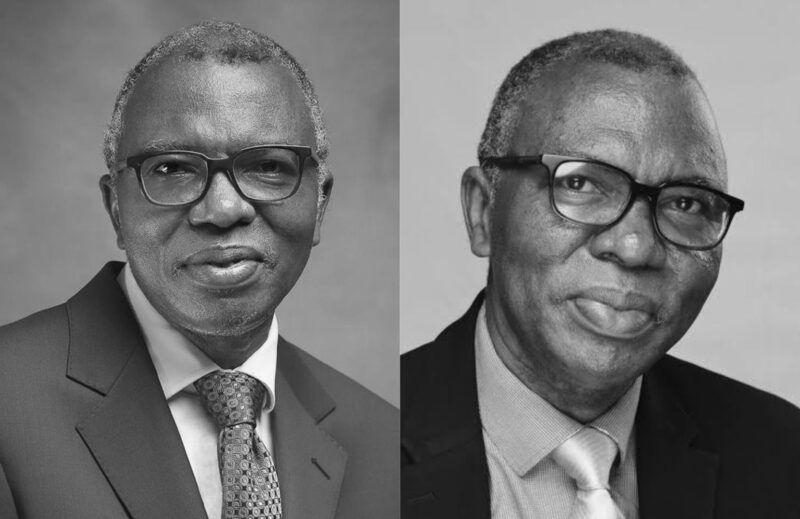

LAGOS, November 17, 2026:** Dr Josef Onoh, a chieftain of the All Progressives Congress (APC), has defended the singing of Nigeria’s former national anthem, Arise, O Compatriots, arguing during an interview on Arise News on Monday, November 16, that neither the 1999 Constitution nor the National Anthem Act 2024 expressly criminalises its rendition.
Onoh’s intervention comes amid growing political controversy over the decision by Nigeria Democratic Congress (NDC) presidential candidate Peter Obi and other party members to sing the former anthem at a town hall meeting in Lagos, prompting criticism from senior government officials and supporters of the ruling party.
Also read:Romelu Lukaku retires from Belgium after 94 goals
Describing the dispute as a trivial matter, the APC chieftain maintained that the legal distinction between recognising an official national anthem and criminalising the use of a former one should not be overlooked.
“These two national anthems symbolise our allegiance, our deep-rooted and historical affiliation to our nation,” Onoh said, referring to Arise, O Compatriots and Nigeria, We Hail Thee.
Nigeria’s current national anthem is Nigeria, We Hail Thee, which President Bola Tinubu reinstated on May 29, 2024, after signing the National Anthem Bill into law.
The legislation replaced Arise, O Compatriots, which had served as the country’s anthem since 1978.

Onoh also drew attention to Section 3 of the National Anthem Act, which specifies the occasions when the official anthem must be performed and sung.
The provision lists Federal Executive Council and State Executive Council meetings, legislative sittings, constitutional oath-taking ceremonies, flag-raising ceremonies, major national celebrations, diplomatic activities and major sporting events.
It also allows other occasions to be designated by the Minister responsible for education with the President’s consent.
He argued that a private political town hall meeting was not expressly identified among the occasions requiring mandatory performance of the anthem.
However, the legislation also contains provisions requiring respect for the official anthem. Section 2 describes it as a national symbol and sign of authority, while Section 5 requires those present to stand and behave respectfully when it is performed.
These provisions form part of the wider legal context surrounding the controversy.
The APC chieftain further referenced Section 24(a) of the 1999 Constitution, which identifies respect for the National Flag, National Anthem, National Pledge and legitimate authorities as civic duties.
He maintained that the constitutional provision does not itself prescribe a criminal penalty for failing to sing the anthem.
The distinction between a constitutional civic responsibility and a specific criminal offence is central to Onoh’s argument.
His comments, however, represent his interpretation of the legislation rather than a judicial determination of the dispute.
The controversy began on Thursday, November 12, during an NDC town hall meeting in the Oregun area of Lagos, attended by Obi and the party’s Lagos State governorship candidate, Funso Doherty.
When attendees were invited to stand for the current national anthem, *Nigeria, We Hail Thee*, Obi and some party members did not join in its rendition.
The event anchor subsequently switched to *Arise, O Compatriots*, which the gathering sang.
Video footage of the incident circulated widely on social media, drawing attention to the political significance of the decision.
TheCable and Vanguard independently reported the incident and identified the two political figures present.
The development attracted criticism from the Minister of the Federal Capital Territory, Nyesom Wike, who accused Obi of disrespecting national symbols and questioned his commitment to national unity.
Wike argued that a presidential candidate should demonstrate respect for the country’s official anthem, particularly during a public political gathering.
The Minister of Aviation and Aerospace Development, Festus Keyamo, also criticised the incident, describing the NDC’s use of the former anthem as suggestive of secessionist tendencies.
Keyamo subsequently gave NDC national leader Seriake Dickson 48 hours to clarify the party’s position on the incident.
The NDC, however, rejected the criticism, maintaining that the rendition of the former anthem was spontaneous rather than a planned political statement.
The party also argued that another part of the event’s recording showed attendees singing the current national anthem, challenging suggestions that the gathering had deliberately rejected Nigeria’s official national symbol.
The debate has also revived memories of Nigeria’s decision to restore its original national anthem in 2024.
*Nigeria, We Hail Thee* was first adopted on October 1, 1960, when Nigeria gained independence from British colonial rule. The anthem remained in use until 1978, when it was replaced by Arise, O Compatriots.
The latter served as Nigeria’s national anthem for 46 years before Tinubu signed the National Anthem Bill into law on May 29, 2024, restoring the original version.
The decision generated considerable public debate at the time, particularly over the speed of the legislative process and the government’s priorities amid economic difficulties facing Nigerians.
With the 2027 general election approaching, the latest disagreement has added another dimension to political exchanges between the ruling APC and opposition figures.

Onoh’s intervention has introduced a legal perspective into what had largely become a debate about patriotism, national identity and political symbolism.
Also read:Romelu Lukaku retires from Belgium after 94 goals
Whether the controversy will attract further legal scrutiny remains to be seen.

Mariam Balogun is a contributor to Freelanews.com, covering news, business, and public affairs.