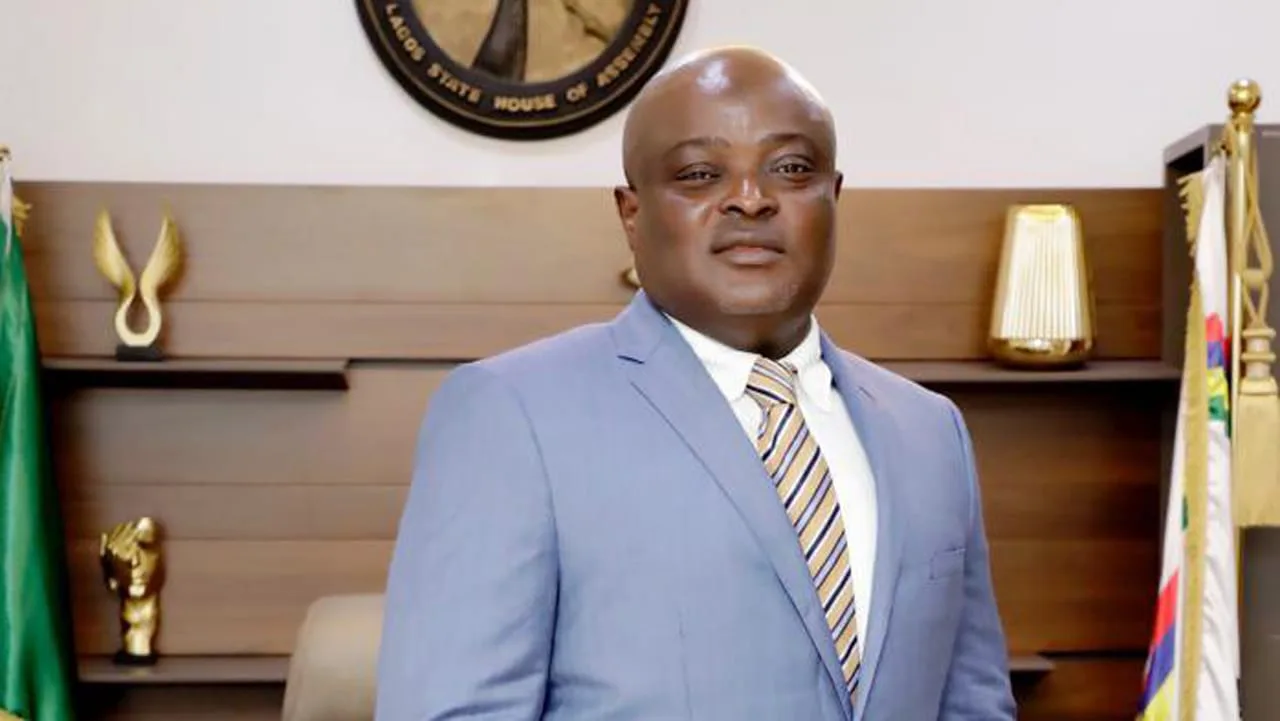

Lagos State House of Assembly Speaker, Rt. Hon. Mudashiru Ajayi Obasa, has called for stronger state autonomy and independent security arrangements for legislatures as Nigeria moves towards establishing state police.
By DAVE Agboola
Obasa made the observations during a plenary session on Tuesday, October 27, 2026, when the Lagos Assembly ratified the proposed constitutional amendment on state policing.
Also read: Danielle Adewusi celebrates Benin royalty in coral throne
Although the lawmakers endorsed the reform, the Speaker raised concerns about provisions he believes could leave state police forces under excessive federal control and weaken the independence of state governments.
He subsequently directed the Clerk of the House, Mrs Adenike Oshinowo, to formally communicate the Assembly’s observations to the National Assembly.
The intervention came after all 36 state Houses of Assembly reportedly approved the Constitution (Sixth Alteration) Bill, 2026, which was awaiting President Bola Tinubu’s assent at the time of the article.

Obasa said his support for decentralised policing was consistent with his position over several legislative sessions, from the fifth to the tenth Assembly.
He has repeatedly argued that local security challenges require local intelligence and responses tailored to the circumstances of individual states, rather than excessive reliance on central authorities in Abuja.
During the October 27 sitting, he identified three major issues that lawmakers and those responsible for drafting the operational framework for state policing should address.
The first concerns the extent of federal control under the proposed arrangement.
Obasa expressed concern that the framework could preserve substantial federal authority over state policing, particularly where disagreements arise between state and federal legislatures over policing laws.
He argued that allowing federal authority to automatically prevail in such circumstances could undermine the purpose of decentralisation.
According to the Speaker, states that finance their police operations, provide logistics and bear the immediate consequences of insecurity should have sufficient authority to determine how their forces operate in response to local needs.
He maintained that state policing would achieve little if governors and state institutions remained dependent on federal approval for important operational decisions.
The second issue raised by Obasa was the need for a dedicated security structure for legislative institutions.
He argued that state and federal legislatures should have independent security arrangements capable of protecting lawmakers and safeguarding the constitutional responsibilities of the legislative arm of government.
Obasa noted that legislatures could become vulnerable when security agencies are deployed in ways that interfere with their operations, particularly during political disagreements between the executive and legislative arms.
He said parliamentary policing should not be viewed as a privilege for lawmakers or an opportunity to create expensive security convoys, but as a safeguard for legislative independence.
Such an arrangement, he argued, would enable lawmakers to carry out oversight functions, scrutinise government activities and represent their constituents without fear of executive intimidation.
His third concern was the need for clear constitutional boundaries between the responsibilities of the proposed Federal Police Service and state police organisations.
Obasa warned that unclear jurisdictional provisions could create conflicts over operational authority, investigation responsibilities and chains of command.
He argued that clearly defined roles would reduce the risk of jurisdictional disputes and improve cooperation and intelligence-sharing between federal and state officers.

The proposed reform has also attracted concerns about the possibility of state governors abusing local police forces for political purposes.
Critics have warned that without effective safeguards, state police could be used to intimidate political opponents, influence elections or undermine citizens’ rights.
These concerns have strengthened calls for national oversight, transparent recruitment procedures, independent police service commissions and judicial safeguards against abuse.
However, Obasa’s position, as presented during the plenary, was that safeguards against misconduct should not become a means of denying states meaningful control over their security institutions.
He maintained that decentralised policing should be accompanied by clear accountability mechanisms while preserving the authority states need to respond effectively to local security threats.
As the proposed constitutional amendment awaits presidential assent and the National Assembly considers the legislation required to guide its implementation, the Lagos Assembly’s observations raise important questions about how state policing will operate in practice.
For Obasa, the success of the reform will depend not only on establishing state police forces but also on ensuring that they possess meaningful operational autonomy, that legislatures remain protected from executive interference and that federal and state security responsibilities are clearly defined.
Also read: Danielle Adewusi celebrates Benin royalty in coral throne
Dave Agboola is the Chief Press Secretary to the Speaker of the Lagos State House of Assembly.

Peculiar Adirika is a journalist and contributor to Freelanews.com, covering news, business, and public affairs.