
FIFA President Gianni Infantino has said Nigeria is not currently equipped to host the FIFA World Cup, citing shortcomings in stadiums, hotels, airports and transportation infrastructure, while leaving the possibility open for the country in the future.
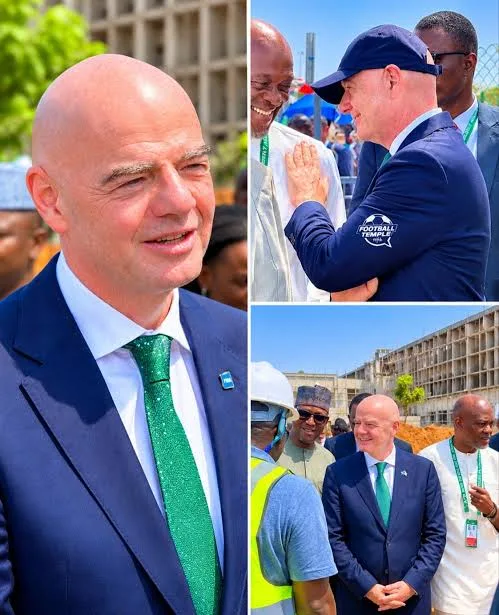
Infantino made the remarks during an interview with Arise News following his visit to Nigeria over the weekend, where he was accompanied by FIFA Secretary-General Mattias Grafström.
Also read:Troops rescue 18 abducted children in Kaduna
Speaking about the requirements for hosting football’s biggest tournament, the FIFA president stressed that infrastructure investment remains the most critical factor in determining whether a country can successfully stage the competition.
“The key for hosting a World Cup is the infrastructure: the stadiums, hotels, airports, and transportation. This is where the investment is really necessary,” Infantino said.
When asked directly whether Nigeria was ready to host the World Cup, he gave a candid assessment of the country’s current position.
“Today, no, but tomorrow, why not?” he responded.

His comments highlight the scale of investment Nigeria would need to undertake before it could realistically compete for hosting rights to the global football tournament, which requires multiple world-class stadiums, accommodation facilities, efficient transport networks, security arrangements and other supporting infrastructure.
Infantino’s remarks, however, were not an outright dismissal of Nigeria’s hosting ambitions.
His response suggested that the country could potentially become a candidate in the future if it addresses its infrastructure challenges and commits to sustained investment in sporting facilities and broader development.
During his visit, the FIFA delegation inspected the remodelled Warri City Stadium, reflecting FIFA’s engagement with football infrastructure development in Nigeria.
Nigeria has previously hosted a FIFA competition, staging the FIFA U-17 World Cup in 2009. The tournament brought international youth football to the country and remains the last FIFA competition Nigeria hosted.

The prospect of hosting a senior FIFA World Cup would represent a significantly greater undertaking, requiring extensive preparation, substantial financial commitments and coordinated efforts between federal and state governments, football authorities and private investors.
For Nigeria, a country with a passionate football following and a rich history in the sport, hosting the World Cup remains an ambitious dream.
Infantino’s assessment makes clear that the ambition would require more than football enthusiasm, with infrastructure development and long-term planning likely to determine whether the country can eventually turn that dream into reality.
Also read:Troops rescue 18 abducted children in Kaduna
His “today, no, but tomorrow, why not?” response leaves the door open, but also places the responsibility on Nigeria to invest in the facilities and systems necessary to meet FIFA’s demanding hosting standards.

Mariam Balogun is a contributor to Freelanews.com, covering news, business, and public affairs.