

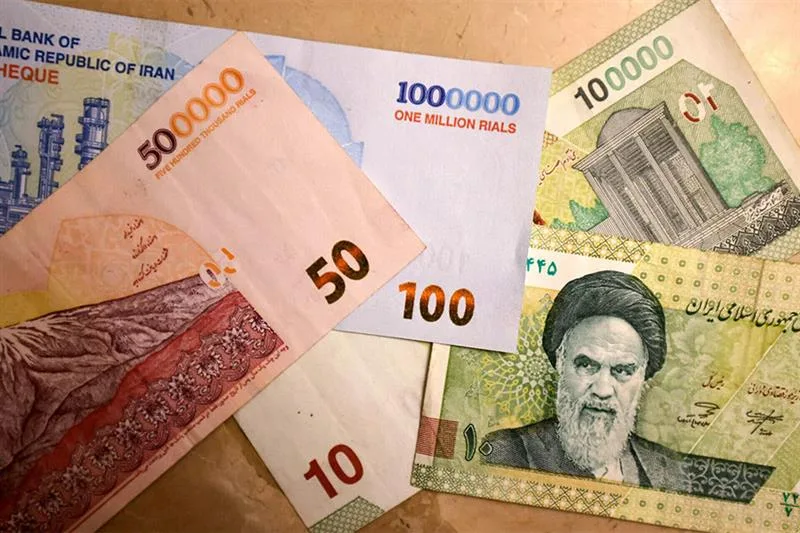

Iran’s currency recorded a significant decline on the black market on Tuesday following fresh sanctions announced by the United States, adding pressure to the country’s already strained economy.
The US Treasury unveiled the measures on Monday, targeting more than two dozen Iranian exchange houses, alleged front companies and individuals accused of operating within Iran’s shadow banking network.
Also read: China sentences official to death for spying, leaking state secrets
Washington said the network was overseen by Iran’s central bank.
By Tuesday afternoon, the US dollar was exchanging for approximately 2.82 million Iranian rials, representing a rise of about five per cent from the previous day’s rate of 2.68 million rials, according to websites tracking unofficial currency prices.
The euro also climbed to around 3.07 million rials, compared with approximately 2.94 million rials on Monday.
The black-market rates are widely used by Iranians because the official exchange rate set by the central bank is considerably lower.

Iran’s Central Bank Governor, Abdolnaser Hemmati, dismissed the latest American sanctions, suggesting that Washington had exhausted its options and was now targeting a legitimate financial platform.
He described the sanctioned Iran Currency and Gold Exchange Centre as a publicly accessible platform for recording transactions.
“The Iran Center for Exchange is merely a platform for registering transactions” and “is there for everyone to see,” Hemmati said, according to Tasnim news agency.
However, the US Treasury’s Office of Foreign Assets Control said the centre played a role in connecting exporters with foreign-currency earnings to importers seeking funds to purchase goods from abroad.
According to the agency, the platform facilitates tens of billions of dollars in trade annually.
OFAC explained that while Iran’s shadow banking system handles funds generated through international trade, the exchange centre helps match those funds with their eventual destinations within the country.
The latest measures come nearly nine months into the Middle East conflict, which began on February 28 after US-Israeli strikes killed Iran’s Supreme Leader, Ayatollah Ali Khamenei.

Iran subsequently retaliated with missile and drone attacks across the region, while armed groups backed by Tehran in Lebanon, Yemen and Iraq also became involved in the conflict.
Washington has intensified its economic pressure on Iran since August through what it describes as an economic asphyxiation campaign.
The United States has also established a task force to disrupt land routes into the country and maintained a naval blockade on Iranian ports in an effort to restrict its oil revenues.
Also read: China sentences official to death for spying, leaking state secrets
The measures are part of Washington’s response to Iran’s effective blockade of the Strait of Hormuz, a strategically important shipping route for global energy supplies.

Peculiar Adirika is a journalist and contributor to Freelanews.com, covering news, business, and public affairs.