

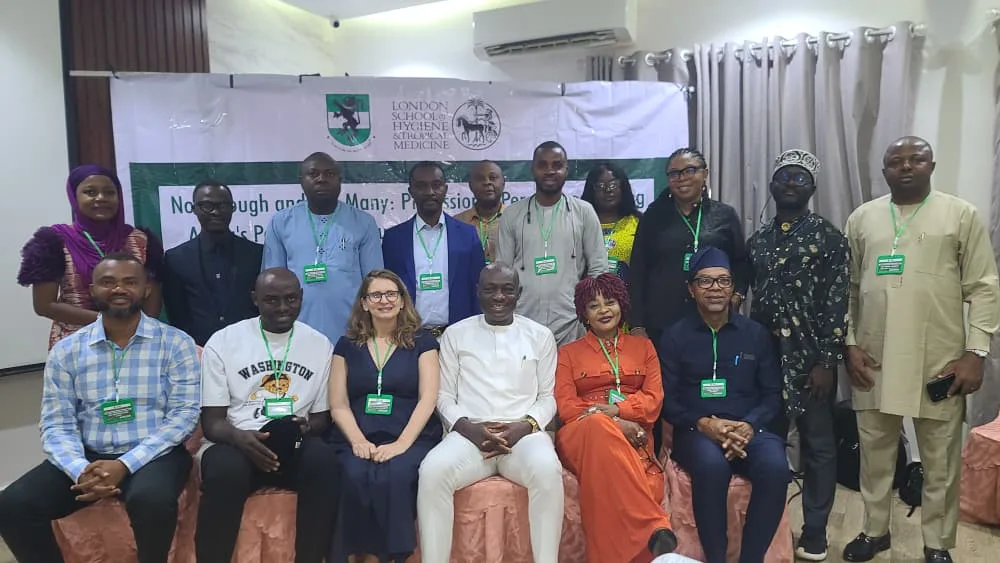

A new research project is examining Nigeria’s healthcare workforce crisis, seeking to understand why qualified doctors, nurses and other medical professionals struggle to secure employment while hospitals and clinics continue to face staff shortages.
The project, titled Not Enough and Too Many: Professional Personhood Among Africa’s Paradoxically Surplus Health Workers (NETOMA), was launched in Abuja on Wednesday, 25 November 2026, by the London School of Hygiene & Tropical Medicine in collaboration with the University of Nigeria, Nsukka (UNN).
Also read:Musa pushes indigenous technology for stronger defence
The initiative seeks to investigate what researchers describe as a troubling contradiction within the healthcare system, where trained professionals remain unemployed or underemployed despite the persistent need for medical personnel.
Speaking at the launch, Professor Chidi Ugwu, the project’s principal investigator in Nigeria, said the research would explore why medical graduates, including doctors, nurses and midwives, struggle to find work even as healthcare facilities lack enough personnel to meet patients’ needs.
Ugwu said the situation raises questions about the country’s approach to healthcare workforce planning, recruitment and deployment, particularly the gap between producing qualified professionals and providing opportunities for them to practise.
He noted that families often make considerable financial sacrifices to educate their children in medical and health-related fields, with the expectation that graduation would lead to employment and financial stability.

However, the difficulties many graduates encounter in securing jobs could have wider consequences for families, communities and the future attractiveness of healthcare professions.
Ugwu also expressed concern about whether persistent unemployment among trained professionals could influence young people’s interest in studying medicine and nursing, although migration opportunities abroad might continue to sustain interest in the professions.
The study will examine the issue through historical, social, cultural and political perspectives, with researchers seeking to understand how the situation affects healthcare workers, their families and society.
Dr Aloysius Odii, the project’s co-investigator and a lecturer at the University of Nigeria, Nsukka, said existing health policies had largely concentrated on addressing workforce shortages by training and producing more professionals, without giving sufficient attention to those already qualified but unable to find employment.
According to Odii, a review of policy documents revealed that unemployment and underemployment among healthcare professionals had received limited attention compared with calls to increase the number of trained workers.

He argued that Nigeria needed to rethink its healthcare workforce strategy by addressing not only the training of professionals but also their recruitment, placement and effective utilisation across health facilities.
Odii said greater policy attention was necessary to ensure that unemployed, underemployed and precariously employed medical professionals were adequately absorbed into the healthcare system.
International Project Investigator, Dr Eleanor Hutchinson, said the contradiction was not unique to Nigeria, noting that similar patterns had been identified in other African countries covered by the research.
She said findings from Uganda and Zambia had already highlighted the coexistence of healthcare staffing needs and unemployment among doctors and nurses, raising questions about how health systems manage their available workforce.
The Nigerian research will focus particularly on doctors and nurses while also examining the experiences of community health extension workers, potentially offering a broader understanding of the challenges facing different categories of healthcare personnel.
The findings could help policymakers move beyond increasing the number of graduates to addressing recruitment bottlenecks, workforce distribution, employment conditions and the capacity of healthcare institutions to engage qualified personnel.
As Nigeria continues to confront healthcare delivery challenges, the research is expected to contribute to conversations about building a more responsive health system in which trained professionals can find meaningful employment while hospitals are better equipped to provide essential services.
The research comes against the backdrop of a wider African healthcare workforce challenge. The World Health Organisation (WHO) has highlighted how increasing numbers of trained health professionals have not translated into enough funded employment opportunities, leaving many workers unemployed or underemployed even as hospitals face shortages.
Its 2026 workforce report points to limited public-sector recruitment capacity, funding constraints, slow employment processes and poor alignment between training and labour-market needs as major contributors to the problem.
The situation has also drawn attention to the need for better workforce planning, stronger employment policies and investment that goes beyond training new medical professionals to creating sustainable jobs and retaining existing personnel.
Nigeria has previously acknowledged challenges involving the recruitment, distribution and retention of health workers, particularly in underserved areas.
Also read:Musa pushes indigenous technology for stronger defence
However, the NETOMA project seeks to examine a different but closely related dimension: why qualified personnel remain outside meaningful employment while healthcare facilities continue to report gaps in staffing.

Mariam Balogun is a contributor to Freelanews.com, covering news, business, and public affairs.