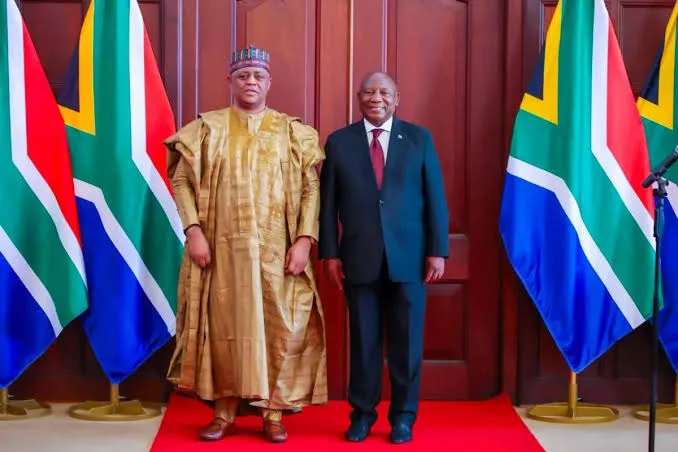

Nigeria’s High Commissioner to South Africa, Olufemi Fani-Kayode, was never summoned by the South African government following the controversy surrounding his presentation of letters of credence, a diplomatic source has said.
The source, speaking to *Daily Sun*, said the meeting between Fani-Kayode and South African officials was neither a reprimand nor a formal démarche, contrary to reports suggesting the Nigerian envoy had been called in to answer for his conduct.
Also read:NANS urges Tinubu to check arbitrary tuition fee increases
According to the source, the meeting took place on November 17, 2026, between Fani-Kayode and the Director-General of South Africa’s Department of International Relations and Cooperation (DIRCO), Zane Dangor.
The source explained that both the Nigerian High Commission and South African officials had independently communicated requests for the meeting, making it misleading to portray the engagement as a one-sided summons.
He said South African officials raised concerns about the events surrounding the presentation of Fani-Kayode’s credentials and his subsequent public comments, while also referencing Article 41 of the Vienna Convention on Diplomatic Relations, which outlines the obligations of diplomats to respect the laws of their host countries and avoid interfering in their internal affairs.
The diplomatic source insisted that DIRCO’s own account did not explicitly describe the meeting as a reprimand or démarche, despite media reports using such descriptions.

The Nigerian High Commission, according to the source, maintained that the meeting was cordial and constructive, adding that Fani-Kayode was neither reprimanded nor issued a warning.
The mission also reportedly used the engagement to raise concerns about the safety and treatment of Nigerians living in South Africa.
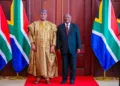
The controversy began on November 13, when Fani-Kayode presented his letters of credence to South African President Cyril Ramaphosa at the Sefako M. Makgatho Presidential Guest House in Tshwane, alongside other diplomats.
The Nigerian envoy was reportedly the last diplomat to make his presentation during the ceremony, which was livestreamed by the South African Presidency.
However, the livestream appeared to cut away before viewers could hear Fani-Kayode’s address, prompting him to allege that his speech had been deliberately excluded and that the incident amounted to a slight against Nigeria.

Fani-Kayode said he raised the issue directly with Ramaphosa during a photo session, claiming the South African President subsequently took him to officials, questioned them about the incident and directed that the matter be addressed.
The following day, South African Presidency spokesperson Vincent Magwenya challenged Fani-Kayode’s account, describing his approach as inappropriate and the incident as a minor operational misunderstanding.
The Presidency later released a separate video showing Fani-Kayode delivering his speech, while the Nigerian High Commission maintained that Ramaphosa had personally intervened to resolve the matter.
The diplomatic source said the controversy also raised questions about whether Fani-Kayode’s public reaction constituted a breach of diplomatic rules, particularly Article 41 of the Vienna Convention on Diplomatic Relations.
However, the source argued that the provision’s invocation did not automatically establish that the Nigerian envoy had violated international law.
He maintained that publicly expressing dissatisfaction over a diplomatic ceremony did not, by itself, amount to interference in South Africa’s internal affairs, noting that the nature, purpose and manner of the communication would be relevant in determining whether a breach occurred.
The source described Fani-Kayode’s approach as potentially diplomatically questionable but said there was insufficient evidence to conclusively establish that he violated the Vienna Convention.
He stressed that diplomatic etiquette and international law were not necessarily the same, adding that diplomats could defend their countries’ interests and protest perceived unfair treatment while remaining mindful of established diplomatic channels.
The source further noted that South African Foreign Minister Ronald Lamola had subsequently told the South African Broadcasting Corporation (SABC) that the matter was closed, while reiterating the importance of diplomatic protocols.
He said the disagreement should also be viewed against the backdrop of recurring tensions between Nigeria and South Africa, particularly concerns over the safety and treatment of Nigerians living in South Africa.
The source called for clarity over what happened during the credentials ceremony, the communications exchanged before the meeting and the discussions between Fani-Kayode and DIRCO officials.
Also read:NANS urges Tinubu to check arbitrary tuition fee increases
He maintained that a diplomatic disagreement did not automatically amount to a legal violation, just as a démarche was not necessarily a reprimand or proof of wrongdoing.

Mariam Balogun is a contributor to Freelanews.com, covering news, business, and public affairs.